Meditation for beginners: A Simple Practice
Meditation is something I never really thought about until later in life. I wish I had started sooner.
When I meditate, I feel calm. My mind slows down, my body relaxes, and the tension dissolves. On the days I skip it, the difference is obvious. My thoughts feel cluttered and overactive. My nerves feel unsettled. My whole system feels a little off.
There was never a dramatic moment where meditation transformed everything, but it has become something I no longer skip. The peace and grounding it brings is steady and real.
“There isn’t always a wow moment, but there is peace, and that is more than enough.”
And here is something I had to learn the long way: you don’t have to sit cross-legged or chant to meditate. One of my favorite ways to meditate is while cleaning. I quiet my mind as I move through simple tasks. My other favorite way is to sit back, close my eyes, and check in with my heart. I tune into its quiet, warm rhythm. I can do that anywhere.
Meditation has eased my anxiety, calmed my nerves, and helped me feel more like myself. I truly recommend weaving it into daily life. It does not have to be perfect. It just has to be intentional.
Table of Contents
What Meditation Really Is
Meditation is the practice of focusing your mind. Some people focus on the breath. Some use a mantra or soft music. Some simply sit in stillness. However you approach it, meditation has become a widely used tool for grounding, mindfulness, and emotional balance.
As someone who practices it regularly, I can say with confidence that it helps.
“Meditation is not about becoming someone new. It is about returning to yourself.”
6 Meditation Benefits
Meditation is more than relaxation. It is a reset for the entire system.
- Reduced stress
- Improved focus
- Better sleep
- Less anxiety
- Emotional steadiness
- Increased self-awareness
Even a few minutes a day can shift how you feel. That calm glow people talk about is real. It comes from inside, not from anything external.
Different Types of Meditation
You do not need to meditate one specific way. You can explore and see what fits your personality and your day.
Here are simple options:
Breathwork Meditation
Focus on your breath. Slow, steady, calm.
Heart-Centered Meditation
Bring your attention to your heart space. Notice what it feels like. Soften into it.
Body Scan
Move your awareness from head to toe, relaxing each area as you go.
Walking Meditation
Walk slowly and pay attention to your steps, breath, and surroundings.
Sound or Music Meditation
Listen to calming sounds or gentle music and let it guide your focus.
Intention-Based Meditation
Set a quiet intention like “I am calm” or “I release tension” and breathe into it.
You can switch between these whenever you want. There is no wrong way.
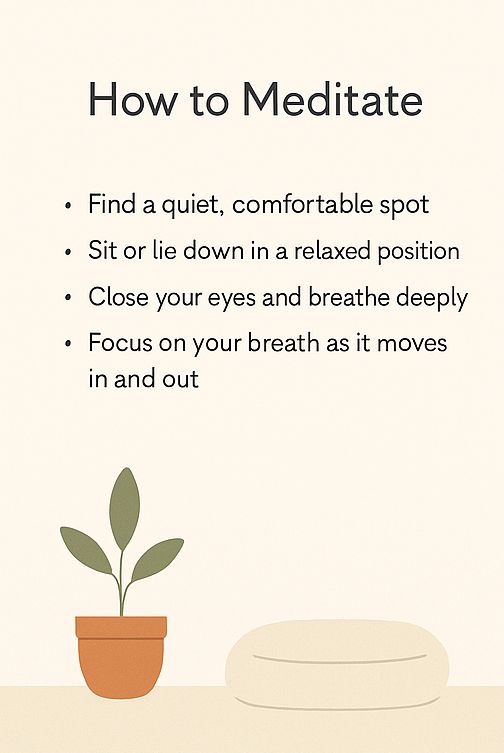
How to Start Meditating
Meditation does not need to be complicated.
- Find a quiet, comfortable spot.
- Sit or lie down in a relaxed position.
- Close your eyes and breathe deeply.
- Focus on your breath as it moves in and out.
- If your mind wanders (and it will), gently bring it back to your breath.
If you want something guided to help you start, try this mindful breathing exercise from UC Berkeley’s Greater Good Science Center:
https://ggia.berkeley.edu/practice/mindful_breathing
That is meditation. No pressure. No strict rules.
You can also meditate while:
- walking
- cleaning
- settling in before sleep
The key is presence, not perfection.
When Meditation Feels Difficult
Some days your mind won’t quiet down. You fidget. You think about errands. You think about snacks.
This is normal.
Start small. Ten seconds. One deep breath. A short pause. It all counts.
“Meditation is not about silencing your thoughts. It is about not letting them run the show.”
If focusing is hard, try guided meditations or calming sounds. A little bit of stillness still goes a long way.
Does Meditation Help Intuition?
Yes, absolutely.
Meditation quiets the noise long enough for you to hear your inner voice. It makes space for your clairs to speak up.
It helps you:
- notice subtle sensations
- feel the difference between fear and intuition
- hear the small inner nudges you usually overlook
- sense your clairs (seeing, feeling, hearing, knowing) more clearly
“When the mind is still, the soul gets louder.”
When your mind settles, your awareness expands. This is why so many intuitive people rely on meditation. It helps you tune in to what is real for you, not what your stress is telling you.
Try This 1-Minute Meditation
If meditation feels overwhelming, start here.
- Sit comfortably.
- Place one hand on your heart.
- Take one deep inhale through your nose.
- Exhale slowly through your mouth.
- Notice your shoulders soften.
- Take one more slow breath.
- Let your body settle.
That’s it. You meditated.
One minute is enough to reset your energy and bring you back to yourself.
Meditation is not about perfection or enlightenment. It is about building a relationship with yourself. With all its mental and emotional benefits, it is worth trying even for a few minutes a day.
Be patient. Be gentle. Let the practice grow at your pace.
Mantra
I return to myself with every breath.
Journal Prompt
Give yourself a short meditation break. Afterward, reflect on the following:
Did you notice a moment of clarity, comfort, or connection?
How did your body feel before and after?
FAQ: Meditation for beginners
1. What are the real benefits of meditation?
Meditation benefits your mind and body in simple but powerful ways. It reduces stress, quiets overthinking, supports emotional balance, and helps you come back to yourself when life feels overwhelming. Even a few minutes can shift your whole energy.
2. How do I start meditating if I am a beginner?
If you want to know how to meditate, start small. Sit comfortably, breathe slowly, and bring your attention back to your breath when your mind wanders. Meditation for beginners does not need to be perfect. Presence matters more than technique.
3. Can meditation really help my intuition?
Yes. Meditation for intuition works because it quiets mental noise and helps you hear your inner voice more clearly. When your mind settles, your clairs (seeing, feeling, hearing, knowing) naturally become easier to notice.
4. What type of meditation should I use for grounding?
For grounding and mindfulness, try breathwork, body scans, or a simple heart-centered practice. Anything that helps you feel present in your body will support grounding and emotional steadiness.
5. How long should a meditation practice be?
Your meditation practice can be as short as one minute. Consistency matters more than length. A few slow breaths each day will do far more for your energy than one long session once a month.
6. Does meditation support psychic development?
Yes. Meditation and psychic development go together because meditation opens space for intuitive awareness. When the mind is calm, your subtle senses become more noticeable and your inner guidance becomes louder.
7. Is there a simple method I can try today?
Yes. Place your hand on your heart, take one slow inhale, and exhale longer than you inhale. Notice how your body softens. This is a grounding meditation you can do anywhere and it resets your energy quickly.
Thank you for the resources and safe space.
You’re so welcome! I’m glad this space feels supportive for you.